In the Name of Truth

Telling Stories with Data: A Social Scientist by Day, a Data Scientist Always
I re-search humans, politically, biomedically, and environmentally, using cutting edge computer science tools!
Deep Learning and Gen-AI for Political Science
While large language models excel at text-based applications, they still have a long way to go with images, audio, and structured data such as surveys. I develop deep learning algorithms and adapt computer science paradigms for survey research, directly applying them to my own research in political science. In my dissertation, Three Essays on AI and Political Behavior developed Survey Transfer Learning, which applies the transfer learning paradigm to survey data to generate synthetic samples that are cheaper, more accurate, and more environmentally friendly than current cutting-edge LLM-based silicon samples. This paper, currently under review at Political Analysis, was honored with the national Bud Roper Fellow Award by the American Association for Public Opinion Research (AAPOR). This work, which is the first to apply transfer learning to survey data by leveraging rich available American public opinion data, was selected for presentation at the DC AAPOR and Washington Statistical Society's joint preview conference at Gallup
I first-authored a chapter in Digital Transformation: Accelerating Organizational Intelligence, which examines how digital transformation is reshaping government and public administration. The chapter analyzes how governments leverage emerging technologies, artificial intelligence, knowledge management practices, and organizational restructuring to enhance efficiency, improve decision-making, and strengthen public trust.
Environmental Policy and Politics
My environmental policy research focuses on the IPCC’s call to measure national variation in adaptation, which is a critical part of addressing global warming. Because climate change is a tragedy of the commons, governments under the UN framework are central actors, and I have worked on a grant that codes Nationally Determined Contributions after the Paris Agreement. I presented this paper at the Southern Political Science Association annual meeting, where I also chaired a panel on environmental policy, and it was later presented at APSA in Vancouver. The study demonstrates how reactive and proactive adaptation strategies have evolved and highlights important differences among low-income states, with implications for international adaptation policy. In a related project, I developed a Neoliberal Policy Index using World Bank WDI data, IMF conditionality measures, the KOF globalization index, and labor law indicators to capture privatization, financial openness, and labor deregulation. I found that from 1989 to 2014, countries, especially in Africa, most exposed to neoliberal reforms adopted a paradoxical adaptation strategy: prioritizing donor-aligned adaptations such as refugee shelters over structural ones like agricultural plans.
Health, AI, Evolutionary Biology, and other stories
In addition to my contributions to social science, I am advancing the application of AI in biomedical and evolutionary research. My work on an NIH-funded project, published in the Nature group, explores the function of a biological thermocouple in the devil worm mitochondria under stress conditions, which mirrors cancer cells. I have also contributed to computer vision projects analyzing first of kind long video of organoid formation —an emerging frontier in medical and stem cell research. This research underscores the transformative potential of AI in understanding cellular processes and advancing personalized medicine. In evolutionary biology, my ongoing project models the extinction of asexual organisms, offering innovative alternatives to traditional explanations such as Muller’s Ratchet. Building on these works, I have been invited to contribute to multiple book chapters exploring mitochondrial cancer biology, with a particular focus on AI application in cancer research.
Democracy Measurement
I investigate democratic backsliding and institutional erosion by developing AI models to analyze political discourse, institutional performance metrics, and socio-economic indicators. This work provides early-warning systems for identifying potential democratic crises, offering invaluable tools to policymakers and international organizations. One notable aspect of this research is my effort to reduce biases in existing measures of democracy, such as those used by V-Dem. By employing computational methods, I address upward and downward biases in democratic backsliding data, providing a more accurate picture of institutional health. In an era where democratic institutions face unprecedented challenges, this work supports the development of robust frameworks for safeguarding democracy worldwide.
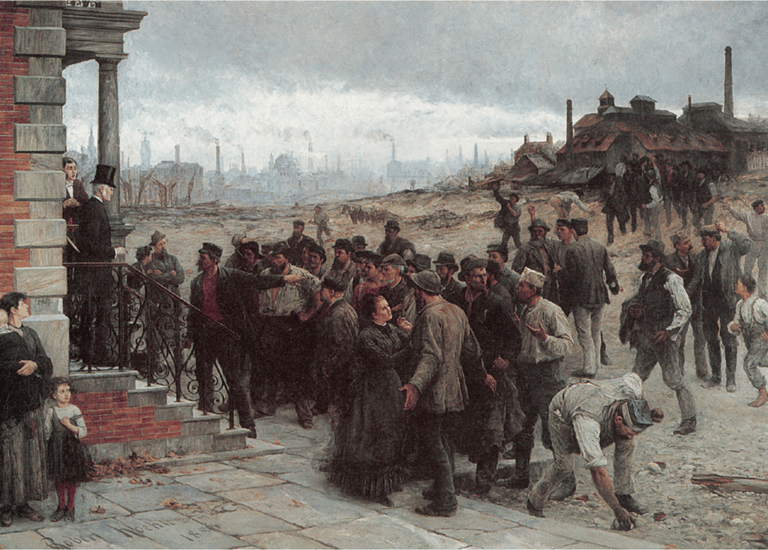
The Strike, Robert Koehler (1886)
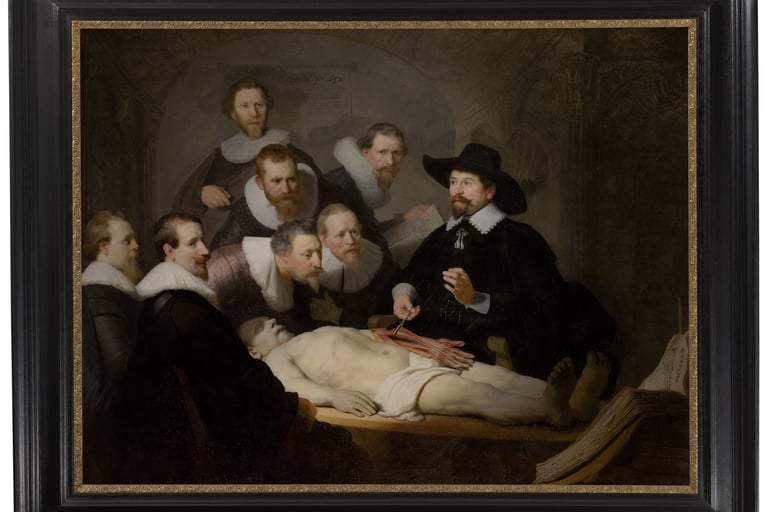
The Anatomy Lesson of Dr Nicolaes Tulp, Rembrandt (1632)


The Ninth Wave, Ivan Aivazovsky, 1850


AI-generated by DALL·E, conceptualized with my assistant.
...There is only one thing you should do. Go into yourself. Find out the reason that commands you to write; see whether it has spread its roots into the very depths of your heart; confess to yourself whether you would have to die if you were forbidden to write. This most of all: ask yourself in the most silent hour of your night: must I write? Dig into yourself for a deep answer. And if this answer rings out in assent, if you meet this solemn question with a strong, simple “I must,” then build your life in accordance with this necessity; your while life, even into its humblest and most indifferent hour, must become a sign and witness to this impulse. Then come close to Nature...
Letters to a Young Poet, Rainer Maria Rilke 1875—1926
Conferences
Participating in academic conferences has been one of the most enriching aspects of my PhD journey. Conferences not only provide opportunities to present original research and engage with leading scholars, but they also serve as platforms for personal and professional growth. For PhD students, these experiences are invaluable for building confidence and self-esteem, as they validate our contributions and help us discover our voice within the scholarly community.
Most importantly, I love exploring the DNA of cities—especially through museums, old streets. From the streets of Warsaw, where the city’s trauma and resistance during the Nazi occupation is preserved in the Warsaw Uprising Museum, to Hiroshima and Tehran’s Peace Museums, each place reveals a distinct historical memory and moral architecture of human suffering, resilience, and hope. These experiences deepen not only my research worldview, but also my understanding of humanity and why knowledge, and these days AI, must ultimately serve humans, not just academia.
Chair and Discussant Roles
While I initially hesitated to step into leadership roles at conferences, believing it might be too soon in my academic career, my passion for research and dedication to advancing scholarship did not go unnoticed. In fact, I was approached by the main chair of the Southern Political Science Association (SPSA) conference, who encouraged me to take on the responsibilities of chairing and serving as a discussant. This recognition was a significant milestone for me, affirming my place in the academic community and motivating me to contribute even more actively.
Political Methodology: Machine Learning and Large Language Models
Southern Political Science Association (SPSA), January 2025
Role: Chair and Discussant
I facilitated discussions on cutting-edge research at the intersection of political methodology and artificial intelligence, providing feedback that enriched the session’s intellectual rigor.
International Environmental Politics and Policy: Environmental Politics and Policy
Southern Political Science Association (SPSA), January 2025
Role: Chair
This session highlighted global environmental challenges, and as chair, I ensured a dynamic and inclusive exchange of ideas.
Similarly, at the Midwest Political Science Association (MPSA) conference in Chicago, I was honored to chair and discuss research on Middle Eastern politics:
Politics of the Middle East
Midwest Political Science Association (MPSA), April 2024
Role: Chair and Discussant
This session tackled the complexities of Middle Eastern political dynamics, and I provided insights that connected individual papers to broader theoretical and empirical debates.
Conference Papers and Invited Presentations
In addition to my roles as chair and discussant, my research has been accepted for presentation at several prestigious conferences
Data Science Frontiers: Society and Politics, NYU- (Poster) 2025
DC-AAPOR/WSS*, Gallup - 2025
APPOR, St. Louis 2025 - Receiving The Burns “Bud” Roper Fellow Award
Midwest Political Science Association (MPSA), Chicago–2024, 2025
American Political Science Association (APSA), Philadelphia, Vancouver – 2024, 2025
Southern Political Science Association (SPSA), San Juan – 2025
These presentations span diverse topics in social sciences, from political behavior to environmental policy and AI frontier, reflecting the interdisciplinary nature of my work.
*American Association for Public Opinion Research (AAPOR) and the Washington Statistical Society (WSS).
Personal Reflection
Being recognized for my academic contributions and approached to serve in leadership roles has been both humbling and empowering. Conferences have been pivotal not only for sharing my research but also for building my confidence as a scholar. These experiences have shown me that passion and dedication to my field are recognized and rewarded, inspiring me to continue engaging with the academic community at every opportunity.
.
Center for Data Science
American University
3590 Nebraska Ave NW
Washington, DC 20016
© 2024. All rights reserved.