In the Name of Truth

Adjunct Faculty & Ph.D. Candidate in Political Science || M.S. Candidate in Data Science (Artificial Intelligence track)
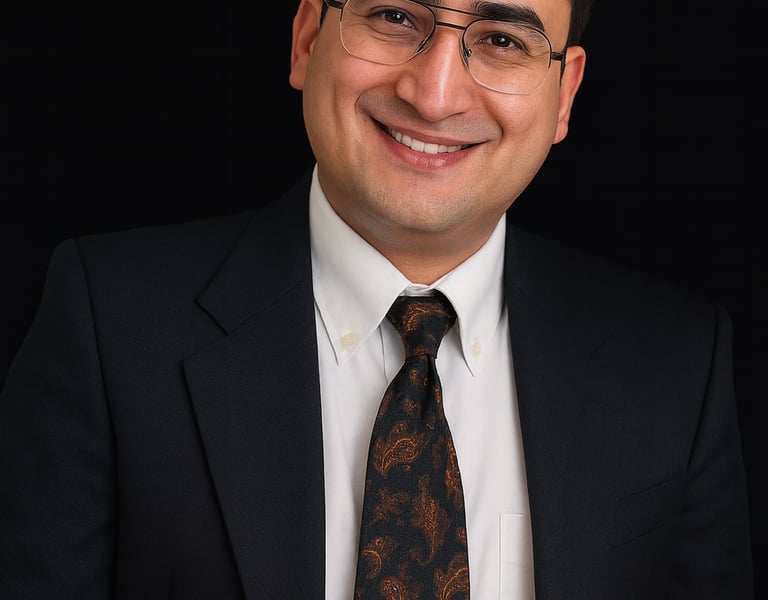
Hi there :) I'm Ph.D. candidate in Political Science at the School of Public Affairs where I also teach AI, American Politics and method. I'm also an M.S. candidate in Data Science (AI track) in the Department of Computer Science and the Department of Mathematics and Statistics at American University in Washington, D.C. My research studies how artificial intelligence represents public opinion and shapes political behavior, democratic institutions, and governance, with a focus on American politics.
My dissertation, Three Essays on AI, Causal Inference and Political Psychology, develops new theory for American politics, frameworks for causal inference, and AI effects in society and state. I also develop AI for social sciences. My chapter on transfer learning for survey research received AAPOR's Bud Roper Fellow Award (2025), and my chapter on Artificial Polarization received a Princeton and APSA Section 10 travel award for PolMeth 2026 and the AAPOR 2026 student poster runner-up award.
My committee is evenly split between political psychology and methodology. David Barker (Chair), my mentor and former Director of SBE Sciences at the National Science Foundation, and Jan Leighley, Program Director at NSF and former Editor-in-Chief of the Journal of Politics and the American Journal of Political Science, represent political psychology. Jeff Gill, former Editor-in-Chief of Political Analysis and my advisor, and Ryan Moore represent methodology. Working closely with this wonderful committee has trained me to appreciate good science and fundable research.
On NSF-, NIH-, and NASA-funded projects, I have contributed to grant writing and have published computational and interdisciplinary articles from that funded work. Most recently, with David Barker and Darrell West of the Brookings Institution, I am a co-investigator on a four-year proposal that we have submitted for external funding. The project tests whether structured conversations with AI can strengthen empathic perspective-taking among citizens and policymakers and, in turn, their willingness and ability to bargain, with effects on legislative productivity. It combines randomized controlled trials with panel and quasi-experimental designs.
I am affiliated with the Consortium on Moral Decision-Making at Penn State, where I work with psychologists on AI and empathy, and I serve on the council and committee of DC-AAPOR and on AAPOR's Transparency Initiative Coordinating Committee, where I evaluate the methodological transparency of major news organizations and polling firms, with a particular focus on the responsible use of AI in measuring and representing public opinion.



Working as a Data Editor and member of the editorial team at Political Analysis was transformative for me. During my Ph.D., I worked under Jeff Gill’s supervision at the journal, where I developed an appreciation for what makes a publication impactful and for how that process works. Reading incoming articles also put me on the front line of frontier methodology, replication, and the meaningful use of statistics and machine learning with a social science mind. It was also the period when the journal published important studies on AI, including Argyle et al. and Bisbee et al.
This shaped my research agenda: to go deep into political psychology and, once there, find which parts of frontier AI can be customized for it, drawing on my math and data science background. So I don’t just import tools from computer science and math. I modify them.
Center for Data Science
American University
3590 Nebraska Ave NW
Washington, DC 20016
© 2024. All rights reserved.