In the Name of Truth


Science Without Walls? Interdisciplinary Perspectives on Humans
Seeking Truth: Holistic Humans,
Holistic Knowledge
I love stories, and in turning big data into small stories about humans-- biomedically, politically, environmentally, and socially-- I see my own academic self-actualization. Philosophers from Socrates, Plato, and Avicenna through to Hegel, Kant, and Wittgenstein inspire my holistic approaches to knowledge, truth, and beauty. We need to revisit their philosophy today to build better academies and train better scholars who can think across boundaries. Their ideas continue to shape my interdisciplinary work and remind me why holistic approaches can help us reach truth. Modern specialization has produced excellent technicians, people who think with precision and solve defined problems well. But the challenges we face today require us to move beyond those old walls. We need a holistic mindset, one that bridges disciplines instead of fencing them off. AI will soon perform much of the work of the technician — whether we want it to or not. Yet no machine can replace our capacity to see the bigger picture, to connect ideas across systems, or to understand the world in its full complexity. That remains humans responsibility.
I believe what makes humans fundamentally different from machines is not our physiology or metabolism, but our holistic understanding of the world. When we experience beauty in nature, like mountains at dawn, a piece of art, or the warmth of a pet, we perceive it as a unified, meaningful whole. This appreciation draws on emotion, memory, and context in ways that transcend computation. A machine, by contrast, interprets the same scene as a matrix[tensor] of numbers, pixels ranging from 0 to 255, without intrinsic meaning. One emerging interpretation of holistic science is precisely this: to be a general audience for other disciplines, capable of seeing connections and meaning where machines only see data.
Political science is my lovely main island I stand on, but I use it to build bridges to other islands, psychology, history, public health, and environmental science, so I can gain a more holistic understanding of humanity’s biggest challenges, from affective polarization in the United States to questions of development and health in the Global South.
It's worth remembering that we were not always hyperspecialized researchers operating in isolation. Until the last century, knowledge was not divided into islands but existed as unified terrain where philosophy, mathematics, and morality created holistic scholar-teachers.
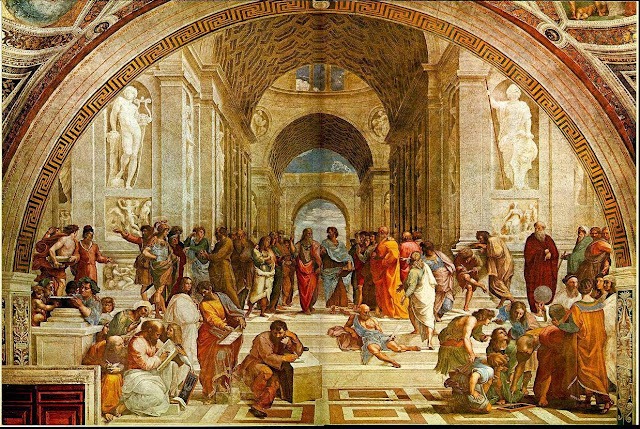
In the arc of modern history, universities moved toward increasing specialization. After World War II, the expansion of academic departments and funding structures deepened disciplinary silos, political science separated from history and law, psychology from philosophy, chemistry from math. This drive for professionalization advanced knowledge, but it often fragmented our understanding of complex humans problems. I believe we are returning to something like Plato's Academy by breaking down walls between departments, which widen our horizons to holistically address humanity's most profound questions.
Today, those boundaries are beginning to bend again. The challenges of our era, climate change, public health crises, polarization, cannot be solved from within a single discipline. Computational social science, political psychology informed by evolutionary thinking, and political economy grounded in historical analysis all provide fresh and important insights. Without psychology and sociology, political scientists cannot fully understand affective polarization; without history and economics, they cannot explain why states pursue particular adaptation strategies or why the Global South faces persistent underdevelopment; without new computational tools, we cannot uncover the subtle patterns that structure public opinion.
For me, the real measure of scholarly life is not only publish or perish but also something deeper, what in Persian we call (jah-vo-dahn-a-gee) جاودانگی (Eternal Legacy). I believe that our lasting impact comes from training ourselves, and our students, to think critically across disciplines and to approach life and politics with a holistic perspective. Publications may secure careers, but جاودانگی emerges when we cultivate scholars and citizens whose voices, confidence, and creativity continue to shape the world long after our own work fades.
From Plato’s Cave to Academy with Eternal Legacy: A Quantum Computing story
Let us now step outside Plato’s Cave to Plato’s Academy with an analogy that I leaned from quantum computing. In Plato’s allegory, we are prisoners at this world who only observe shadows on the wall—mere projections of the truth we cannot directly see. This mirrors the distinction between a quantum state and a measurement outcome. In quantum mechanics, the true state of a qubit exists as a superposition represented by its full wavefunction, yet what we actually observe in the classical world is only the collapsed state after measurement, the shadows. Reality in its richest form is hidden within the amplitudes and probability structure of the quantum state itself, not in the single 0 or 1 we finally observe. In this sense, most of what we call “knowledge” in everyday academic life resembles the shadows: simplified, collapsed, discretized outputs of a much deeper underlying truth.
Eternal Legacy—is the philosophical act of refusing to remain satisfied with shadows. Like the few philosophers leaving the Cave and entering Plato’s Academy, true scholarly pursuit requires merging science, morality, and caring for humans with deep critical reflection to approach the deeper structure of reality—just as quantum computation manipulates the hidden amplitudes before collapse. Perhaps, our task as scholars is not merely to produce observable outcomes (papers, metrics, citations), but to engage with and seek the unseen truth—the superposition of ideas, theories, values, and futures—that will continue long after our empirical measurements are forgotten. That is seeing the Truth and جاودانگی.
Back to Plato's Academy?
I began my coding journey and algorithm* studies at one of the "National Organization for Development of Exceptional Talents" schools in 2005. At that time, accessible computing power, coding IDEs, and educational resources were boring and limited. (Floppy disks were just 360K - Btw, Boeing 747s still received critical updates via floppy disks.) Today's AI and online platforms are fascinating in how they enable accelerated learning and development. These days, as my own journey demonstrates, anyone with passion, an internet connection, and a solid math foundation can efficiently learn deep learning and other stories—even through top MIT courses. The accessibility of AI education today exemplifies the democratization of learning, a stark contrast to the limited resources available when I first started coding.
As a first-generation student from Iran who was raised with world literature, philosophy and history, I always wanted to explore ideas and see history reflected in the cities. One pathway was through Olympiads and NODET schools, which I earned admission to, eventually securing several full grants during my formative years that shaped my passion for academia and taught me that science is more valuable than wealth. This allowed me to have a diverse intellectual journey and experiences that inform my life today.
These ranged from participating in international physics tournaments in Warsaw—a city that endured both Nazi and Stalinist regimes in a short period, where people wanted to tear down the tallest building in the EU because it was an imposed gift from Stalin—to addressing development and world security challenges in Hiroshima (the nuclear bomb site), Kyoto (the pinnacle of Japanese culture), and Tokyo (the epitome of technology). I engaged in deep dialogue about Mediterranean and West Asian politics at the MEM Summer Summit in Lugano, a trip which enabled me to explore Milan and Istanbul with their rich histories marked by many unnecessary wars. I presented work on machine learning at APSA in Philadelphia (a city with a wonderful history of civil rights movements and as an Underground Railroad hub for freedom seekers escaping north, home to the Angel of the Resurrection statue), and discussed the political psychology of public opinion at AAPOR in St. Louis, the gateway to the west and where the Louisiana Purchase continues to shape major outcomes today.
Building on that mathematical foundation and the experience of attending conferences during the day and walking through these cities in the evening—reflecting on their histories; I have come to understand that my mission is contributing to responsible science and raising the next generation of holistic teaching scholars who care about humanity.
I have been teaching physics, stat, algebra*, and calculus since 2004. These days I am passionate about teaching and collaborating with the Institute for Data Science and Big Data to introduce AI and teach it effectively to social science, and data science students during a 10-day intensive program.
This collaboration builds on my extensive teaching experience, including serving as a teaching assistant for over fourteen courses in computational political science, coding, and data science. I also previously led a specialized module on non-linear models at the Institute. Building on this foundation, I will now teach modules on Large Language Models for Social Science, Generalized Additive Models and applied artificial intelligence in social science.
From Floppy Disks to AI, From Hiroshima to Warsaw:
Pursuing Humans Stories
Plato's Protagorus & the Drama of the Academy
Raphael / (1509–1511)
Teaching LLMs, ML and non-linear method
for Social Science
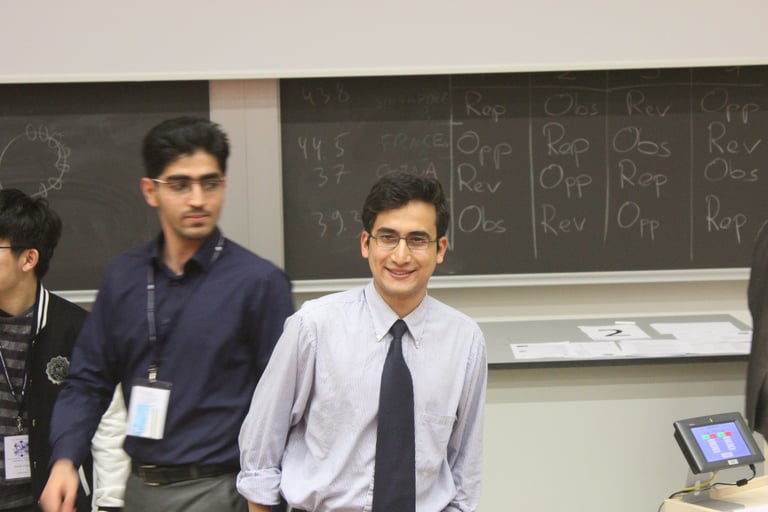
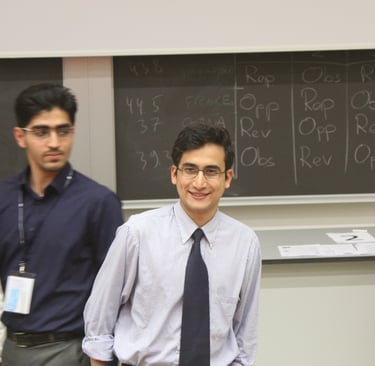
International Physicists' Tournament - Warsaw 2015
Political Data Science
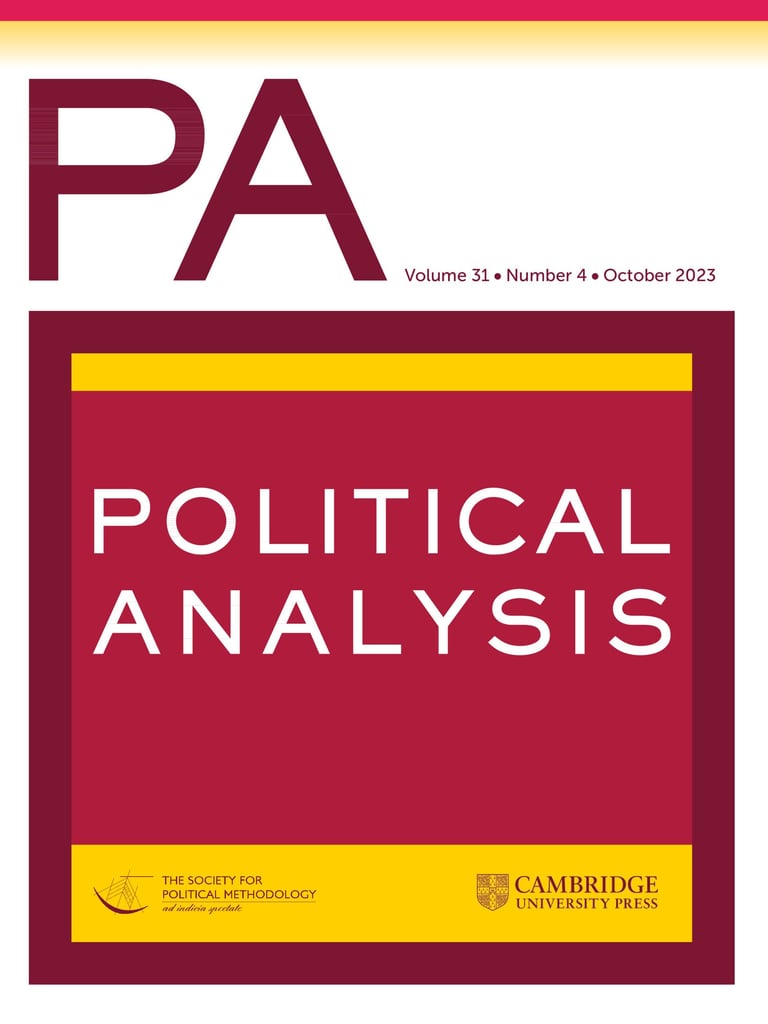
Working with Jeff Gill has been transformative in shaping my political data science skills . As Data Editor and Editorial Team for Political Analysis, the leading journal at the intersection of methodology and social science, I have witnessed the immense potential of innovative methodology approaches to revolutionize political science research. This role has also underscored the critical importance of responsible AI practices and reproducibility to ensure transparency, equity, and reliability in advancing the discipline. It has solidified my commitment to fostering innovative and ethical approaches in this rapidly evolving field.
* The word algorithm originates from the Iranian mathematician Al-Khwarizmi, whose groundbreaking work in mathematics laid the foundation for modern computational methods. His book on algebra, Kitab al-Mukhtasar fi Hisab al-Jabr wal-Muqabala, was so influential that the term algebra itself is derived from its title. Today, all computer science and artificial intelligence systems are fundamentally built upon algorithms and algebra, reflecting his lasting impact on today's technology.
Contact Information
Get in touch to discuss political data science, AI applications, and innovative methodologies in survey data analysis or public opinion research.
Connect
Center for Data Science, American University
Inquiry
aa6718a@american.edu
Center for Data Science
American University
3590 Nebraska Ave NW
Washington, DC 20016
© 2024. All rights reserved.